Additive manufacturing accelerates defence innovation in the Baltics
In today’s security environment, speed is no longer just a competitive advantage. It is the ability to respond, learn and build something new when the need arises. For defence companies, start-ups, research organisations and industrial actors, this means a new relationship with product development and manufacturing.
Traditional development cycles that take years are not suited to a world where technology advances quickly and needs evolve continuously. What is needed are partners that can move at the same pace: fast, flexible and pragmatic.
This way of thinking is especially visible across the Baltics. The region has a strong digital culture, an agile way of working and the ability to bring new solutions into practice quickly. That is exactly why the Baltics are an interesting environment for manufacturing innovations.
Additive manufacturing is more than a 3D printer
When people talk about additive manufacturing (AM), the focus is often on machines, materials and printed parts. These are important, but the real value comes from the broader process.
AM is digital manufacturing. It brings together design, material expertise, production, post-processing and an understanding of the application into one smooth workflow.
This means that an idea can be turned quickly into a testable physical part. A digital model can be reviewed, modified, manufactured and validated rapidly. As more is learned, the model can be updated and the next version produced quickly.
For the defence sector and related industrial actors, this is especially relevant in three areas:
1. Product development, when a new solution needs to be tested quickly in physical form.
2. Production, when production batches are needed without delays or high ramp-up costs of traditional manufacturing methods.
3. Maintenance, when the availability of a single part, fixture, housing, tool or auxiliary component can determine how quickly operations can continue.
This is about bringing manufacturing capability closer to development work and practical needs.
Faster iteration, better learning
In agile development, the first version is never the final one. Its purpose is to generate learning.
Additive manufacturing fits this mindset well. When a part can be produced without moulds, long procurement chains or production batch sizes, development teams can test more alternatives faster. The focus shifts from waiting to learning.
This is important especially for actors developing new products, systems, equipment, devices or production tools. Often the critical question is not whether a part can be manufactured. The critical question is how quickly it can be tested, improved and taken to the next stage.
AM also enables structures that are difficult, expensive or impossible to manufacture with traditional methods. Lightweight designs, integrated forms, optimised channels, complex geometries and fit-for-purpose material choices can bring concrete benefits in performance, durability and usability.
At the same time, the range of materials has expanded. In industrial applications, both engineering plastics and metals can be used when the application, load, temperature, chemical environment and other requirements are considered already at the design stage.
The Baltics need straightforward manufacturing partners
One of the strengths of the Baltics is the ability to move forward. The region values solutions that do not remain stuck in slide decks, plans or lengthy processes. Once a need has been identified, the next question is often: how do we test this in practice?
3DStep answers this need.
3DStep’s serial production solutions are available to actors in the Baltics. We bring industrial AM and practical production expertise within reach of companies and organisations that need fast and reliable support for product development, production or maintenance.
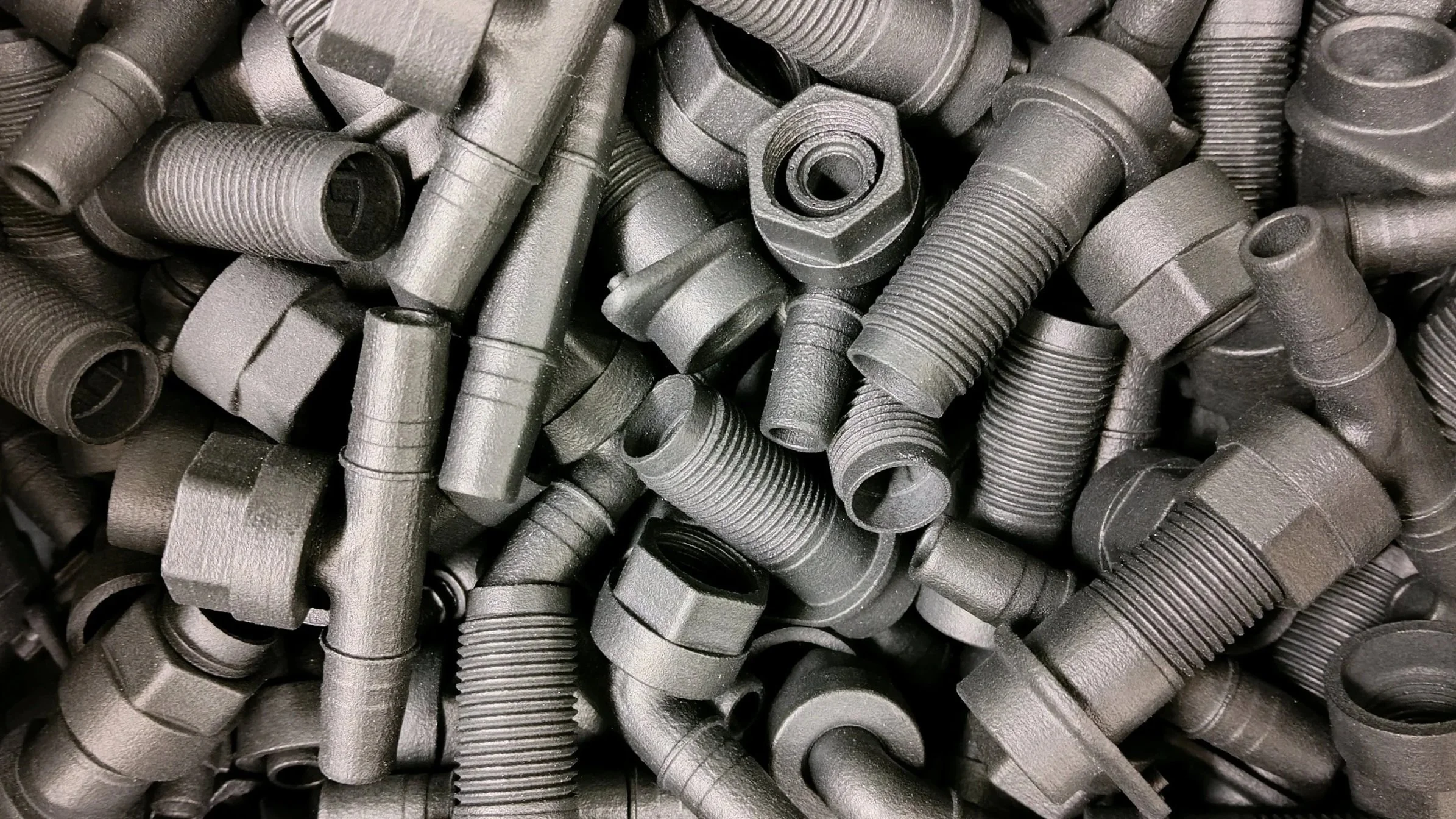
3DStep serial production for polymer components
We are more than a parts supplier. We want to be a partner with whom it is easy to start a conversation, assess options and take ideas to the next stage.
A partnership can begin with a single prototype, spare part, production aid or material test. It can continue into serial production, design development or the integration of digital manufacturing processes into the customer’s own operations.
What matters most is that cooperation is smooth. When a customer has a challenge, we help identify the best way forward. The answer is not always AM. But when AM can bring speed, flexibility or new performance, its potential should be recognised early.
Manufacturing capability is part of resilience
In the operating environment of defence, security and critical industry, manufacturing capability has a broader meaning. It is also connected to security of supply, maintenance, spare-part availability and the ability to adapt to changing circumstances.
Additive manufacturing does not replace all traditional production. Its strength is in complementing existing manufacturing chains where speed, flexibility, customisation or local availability are especially important.
When a digital model, material expertise and production capacity come together, it becomes possible to build a more flexible way to respond to practical needs. This may mean a faster prototype, shorter downtime, improved ergonomics, a lighter structure or a part that is otherwise difficult to obtain. This is exactly the kind of practical, hands-on innovation that the rapidly developing Baltic operating environment needs.
Do you need faster prototyping? Are you looking for a more flexible way to produce production batches? Are there bottlenecks in maintenance or spare parts? Would you like to explore where additive manufacturing could bring concrete value to your operations? Let’s solve it together.
Contact: sales@3dstep.fi
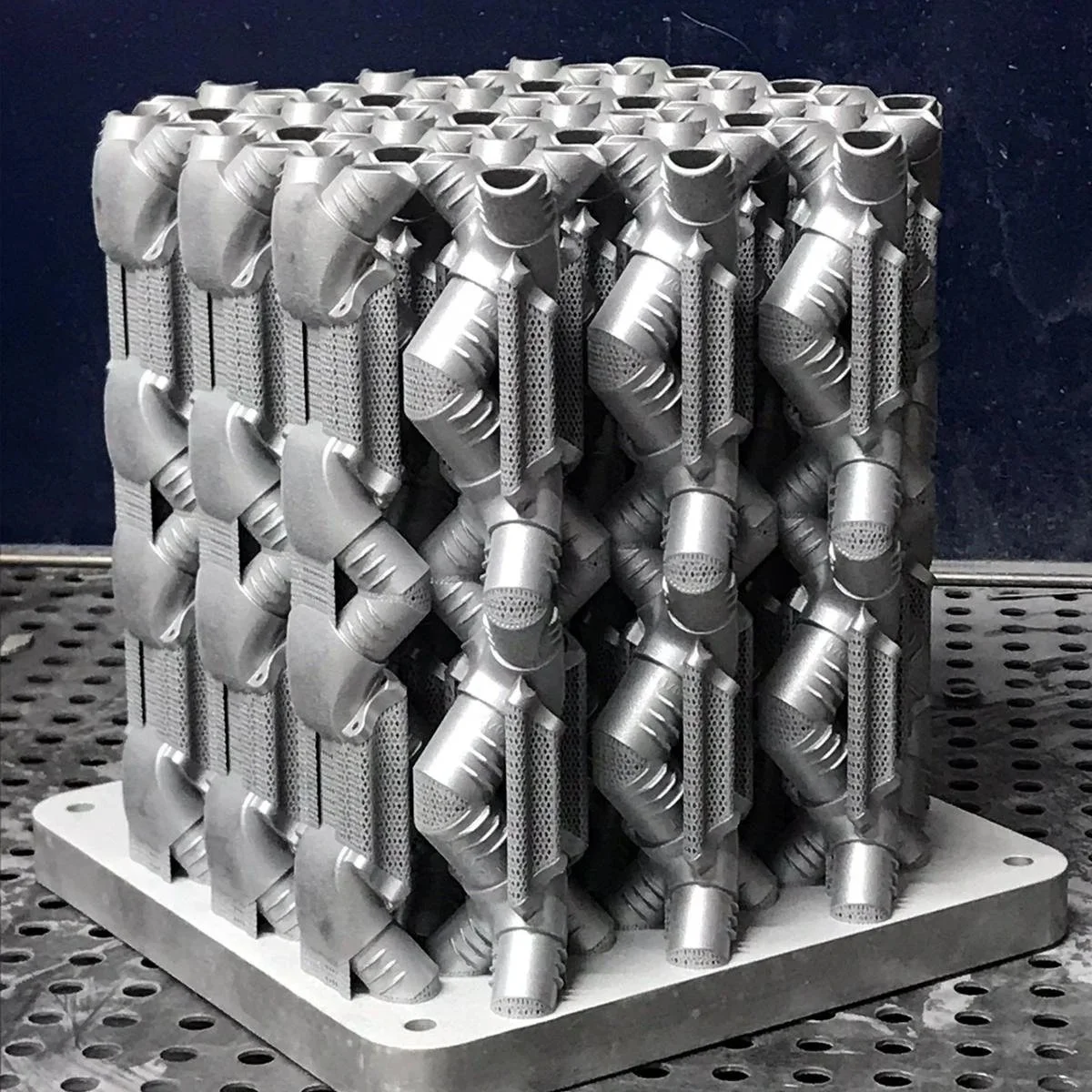
3DStep serial production for metals